
Coordinate Systems#
RadarSimPy uses right-handed coordinate systems for all spatial representations. This page describes the global and local coordinate systems used throughout the library.
Global Coordinate System#
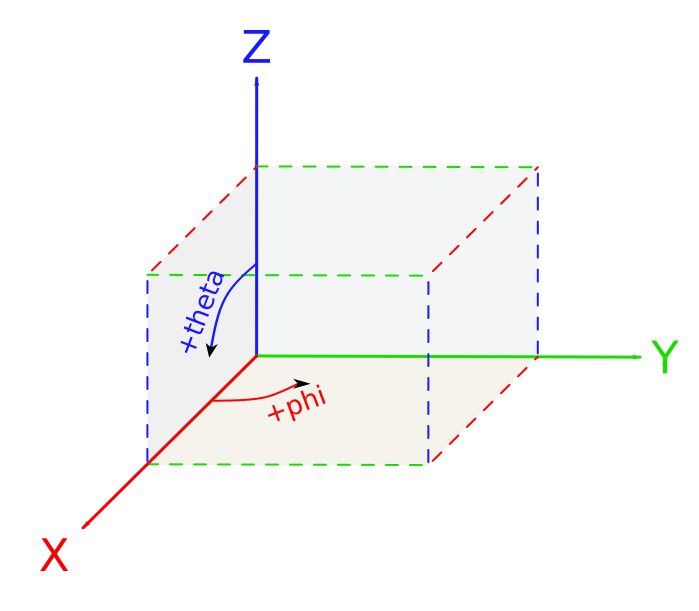
The global coordinate system defines the absolute reference frame for all simulations.
Cartesian Coordinates
axis (m):
[x, y, z]- Position vector in metersx: East-West axisy: North-South axisz: Vertical axis (up)
Spherical Angles
phi (φ, deg): Azimuthal angle in the x-y plane
Range: 0° to 360° (or -180° to 180°)
0° corresponds to the positive x-axis
90° corresponds to the positive y-axis
Measured counter-clockwise when viewed from above
theta (θ, deg): Polar angle from the z-axis
Range: 0° to 180°
0° corresponds to the positive z-axis (zenith)
90° corresponds to the x-y plane (horizon)
180° corresponds to the negative z-axis (nadir)
Local Coordinate System#
The local coordinate system defines object-specific reference frames using Euler angles and origin translations.
Euler Angle Rotations
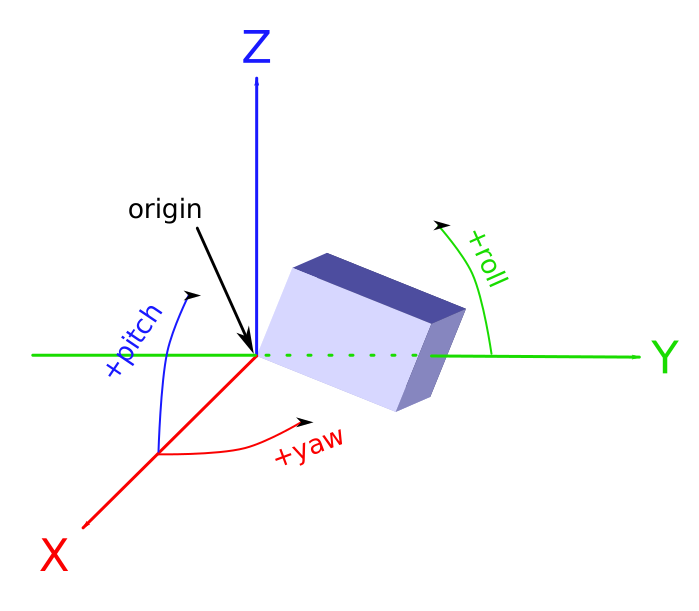
Rotations in RadarSimPy are specified using the configuration array: [yaw, pitch, roll]. Rotations are applied in the order: yaw → pitch → roll (Z-Y-X convention).
yaw (deg): Rotation about the z-axis
Positive yaw rotates counter-clockwise from the positive x-axis toward the positive y-axis
Range: -180° to 180° (or 0° to 360°)
pitch (deg): Rotation about the y-axis
Positive pitch rotates the positive x-axis toward the positive z-axis
Range: -90° to 90°
roll (deg): Rotation about the x-axis
Positive roll rotates the positive y-axis toward the positive z-axis
Range: -180° to 180°
Example Configuration
# Define rotation: 45° yaw, 10° pitch, 5° roll
rotation = [45, 10, 5]
Origin
origin (m):
[x, y, z]- The center point for rotation and translation operationsAll rotations are performed about this point
The radar’s origin is always fixed at
[0, 0, 0]Target objects can have arbitrary origins
Radar-Centric Angles#
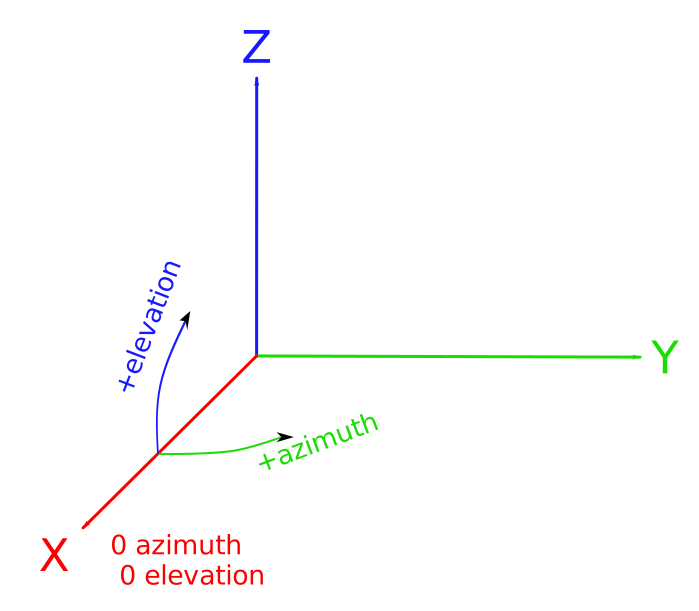
For radar applications, azimuth and elevation angles provide an intuitive alternative to phi and theta.
Angle Definitions
azimuth (deg): Horizontal angle in the local x-y plane
Range: -90° to 90°
Equivalent to φ in the range [-90°, 90°]
0° is boresight (forward direction)
Positive values are to the left, negative values are to the right
elevation (deg): Vertical angle from the horizon
Range: -90° to 90°
Related to θ by: elevation = 90° - θ
0° is the horizon (x-y plane)
Positive values are above the horizon, negative values are below
Relationship to Global Coordinates
Notes#
All angles use degrees unless otherwise specified
All distances use meters as the base unit
Right-handed coordinate systems ensure consistency with standard conventions
The coordinate transformation order matters: always apply yaw, then pitch, then roll